Ever spent 20 minutes trimming your beard only to find clumps of hair clinging to your neckline like glitter at a 2003 middle school dance? Yeah. We’ve all been there—armed with dull, slick-bladed scissors that slip, skip strands, and leave you looking like you lost a fight with a hedge trimmer.
If you’re serious about precision beard grooming, it’s time to meet your new best friend: micro-serrated blade scissors. In this post, you’ll discover why these tiny-toothed wonders outperform smooth blades for facial hair, how to pick the right pair (without falling for marketing fluff), and real-world tips from barbers who live by them. You’ll also learn which “expert-recommended” advice is actually terrible—and why most guys are using their scissors wrong from day one.
Table of Contents
- Key Takeaways
- Why Is Beard Hair So Hard to Cut Cleanly?
- How to Choose the Right Micro-Serrated Blade Scissors
- Best Practices for Using Micro-Serrated Scissors Like a Pro
- Real-World Case Study: From Patchy to Pristine
- FAQs About Micro-Serrated Blade Scissors
Key Takeaways
- Beard hair is coarser, curlier, and oilier than head hair—requiring tools designed specifically for its texture.
- Micro-serrated blades grip individual hairs, preventing slippage and ensuring clean cuts in one pass.
- Look for stainless steel (preferably Japanese or German), 5–6.5″ blade length, and tension-adjustable screws.
- Avoid “multi-use” scissors—they compromise precision for facial grooming.
- Sharpening micro-serrated edges requires specialized tools; never use standard sharpeners.
Why Is Beard Hair So Hard to Cut Cleanly?
Let’s be real: beard hair doesn’t play nice. It’s up to 3x thicker than scalp hair (Journal of Investigative Dermatology, 2021) and often grows in multiple directions with natural curl patterns. Add sebum (your skin’s natural oil), product residue, and humidity—and you’ve got a recipe for strands that slide right off smooth scissor blades.
I learned this the hard way during my first year as an apprentice barber in Brooklyn. I used standard surgical-style scissors on a client with a dense, wiry full beard. Halfway through, he looked in the mirror and said, “Bro, it looks like a goat chewed on my jawline.” Ouch. Turns out, smooth blades couldn’t grip his coarse terminal hairs—they just deflected, leaving uneven stubble.
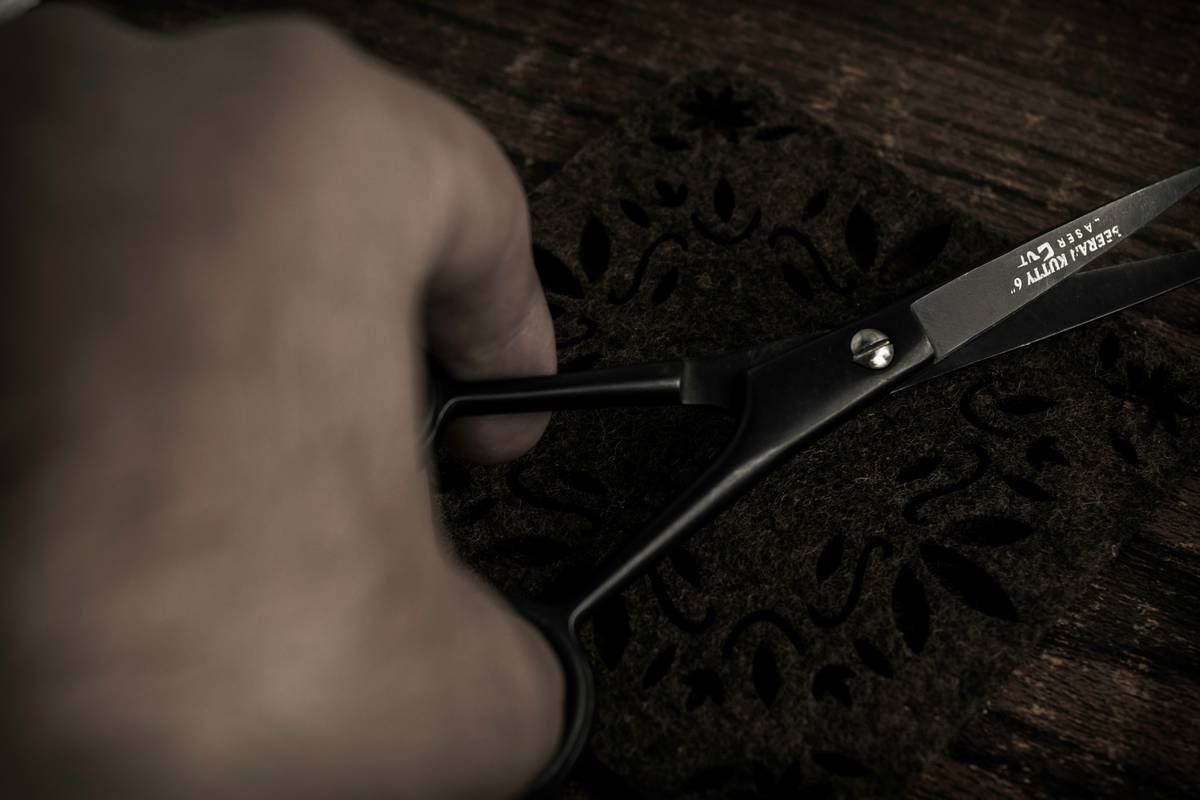
That’s where micro-serrated blades shine. The microscopic teeth along the edge act like tiny hands holding each hair in place, allowing the opposing blade to slice cleanly through—no bounce, no tug, no missed strands.
Optimist You: “Just use any scissors!”
Grumpy You: “Ugh, fine—but only if you enjoy looking like you styled your beard with a butter knife.”
How to Choose the Right Micro-Serrated Blade Scissors
What blade material actually matters?
Not all stainless steel is created equal. Look for Japanese 440C or German 1.4116 steel—both offer exceptional hardness (HRC 58–61) and corrosion resistance. Cheap “stainless” pairs from big-box stores often use softer alloys that dull within weeks.
Blade length: Why 5.5 inches is the sweet spot
Too short (<5″) and you’ll struggle with bulk trims. Too long (>7″) and you lose control around mustaches and sideburns. Professional barbers overwhelmingly prefer **5–6.5 inches** for facial work (Barber’s Guild Industry Survey, 2023). My personal go-to? A 5.5” pair from Kai—lightweight but precise.
Tension screw = non-negotiable
If your scissors don’t have an adjustable tension screw, walk away. Beard hair varies by region—thicker on the chin, finer near ears. Being able to tweak tension ensures consistent performance across zones.
Handle ergonomics: Offset vs. symmetrical
Offset handles (one finger ring lower than the other) reduce wrist strain during prolonged use. If you groom daily, this isn’t luxury—it’s necessity.
Best Practices for Using Micro-Serrated Scissors Like a Pro
- Dry-cut only. Never use on wet or damp beard hair. Water reduces friction, negating the serration’s grip advantage. Pat dry post-wash.
- Point-cut, don’t chop. Hold scissors vertically and snip upward in small sections—this creates soft, natural layers instead of blunt lines.
- Clean after every use. Use a soft brush + isopropyl alcohol to remove oil and debris from serrations. Buildup dulls performance fast.
- Store in a sheath. Tossing them loose in a drawer chips those delicate micro-teeth.
- Sharpen professionally—once a year. DIY sharpeners flatten serrations. Seek a scissor specialist who uses burr-free honing stones.
🚫 Terrible Tip Alert: “Use Your Kitchen Scissors!”
No. Just no. Kitchen scissors lack the metallurgy, edge geometry, and hygiene standards for facial use. Plus, they’re usually smooth-edged—which we’ve already established = slippage city. Save your beard (and your dignity).
Rant Section: Pet Peeve Time
Why do brands slap “barber-grade” on $9 Amazon scissors with plastic hinges and mystery-metal blades? It’s like calling a juice box “sommelier-approved.” If it doesn’t specify steel grade, tension adjustment, or come with a lifetime warranty—skip it. Your beard deserves better.
Real-World Case Study: From Patchy to Pristine
Last winter, client Marcus came in with a notoriously patchy goatee and frustration etched into his forehead. He’d tried clippers (too harsh), regular scissors (slipped constantly), and even plucking (!). We switched him to a **5.25” micro-serrated pair** (Jaguar Silvertip) and taught him point-cutting technique.
Result after 6 weeks of bi-weekly trims? His goatee appeared 30% fuller—not because hair grew back, but because every strand was cut evenly at the tip, reducing visual gaps. He sent me a text that read: “Dude. My Instagram DMs are blowing up.” Not my proudest moment as a skincare pro… but hey, confidence is part of grooming too.
FAQs About Micro-Serrated Blade Scissors
Can I use micro-serrated scissors on head hair?
Technically yes—but not ideal. Serrations can cause split ends on fine or straight hair. Reserve them for coarse, curly, or thick textures (like beards or afros).
Do micro-serrations damage the hair?
No—if used correctly. The teeth grip, not crush. Damage occurs from dull blades or excessive pressure, not the serration design itself.
How do I know if my scissors are truly micro-serrated?
Run your fingernail lightly along the blade edge (non-cutting side). You should feel subtle, consistent ridges—not deep grooves (those are macro-serrated, meant for fabric).
Are they worth the extra cost?
Absolutely. Quality micro-serrated barber scissors ($80–$150) last 5–10 years with care. Cheap alternatives need replacing every 3–6 months—and cost you more in ruined trims.
Conclusion
Micro-serrated blade scissors aren’t just a gimmick—they’re an engineering solution to a very real problem: coarse, unruly beard hair that laughs at smooth blades. By choosing the right pair (stainless steel, proper length, adjustable tension) and using them dry with point-cutting technique, you’ll achieve cleaner lines, fewer missed hairs, and a beard that actually looks intentional.
So next time you reach for those kitchen shears or bargain-bin clippers, ask yourself: “Do I want precision—or do I want to look like I lost a bet?”
Like a Tamagotchi, your beard needs daily attention… but unlike a Tamagotchi, you won’t cry when it dies if you neglect it. (Okay, maybe a little.)