Ever snapped a single beard hair—just one—and your scissors went thwip like wet spaghetti? Yeah. You’re not dull. Your scissors are.
If you’ve ever tried trimming split ends or shaping a goatee with blunt blades, you know the horror: jagged cuts, uneven lines, and that soul-sucking moment when you realize you’ve just turned your chin into a topiary gone wrong. But here’s the truth most grooming blogs won’t tell you: sharpening beard scissors isn’t just maintenance—it’s mastery.
In this guide, I’ll walk you through why proper sharpening matters, how to do it safely (without turning your $80 Japanese steel into scrap metal), and what tools actually work. Plus, I’ll confess my worst sharpening fail (spoiler: it involved kitchen shears and regret). You’ll learn the science behind edge bevels, avoid industry scams, and keep your scissors sharp enough to slice a whisper.
Table of Contents
- Why Sharpening Beard Scissors Matters More Than You Think
- How to Sharpen Beard Scissors: A Foolproof Step-by-Step Guide
- 5 Best Practices for Long-Lasting Sharpness (That Barbers Swear By)
- Real Barber, Real Results: A Case Study from Brooklyn
- FAQs About Sharpening Beard Scissors
Key Takeaways
- Dull beard scissors cause split ends, skin tugging, and poor precision—even on premium tools.
- Most home sharpeners damage micro-beveled edges; professional honing is safest for high-end scissors.
- Frequency matters: Trim weekly? Sharpen every 6–12 months depending on use and steel hardness.
- Cleaning before sharpening is non-negotiable—oil and debris ruin edge alignment.
- Never use kitchen sharpeners or sandpaper—they destroy the delicate convex edge on grooming scissors.
Why Do My Beard Scissors Go Dull So Fast?
Let’s get real: beard hair is tougher than it looks. Human facial hair has a tensile strength of ~200 MPa—comparable to aluminum wire—and its keratin structure resists cutting far more than head hair (Source: Journal of Cosmetic Science, 2021). Every snip wears down your scissor’s microscopic edge bevel, especially if you’re using stainless steel with a Rockwell hardness under 56 HRC.
I learned this the hard way. Two years ago, I bought a gorgeous pair of Kai 7240 beard scissors—hand-forged in Seki City, Japan, with a razor-honed convex edge. After six months of weekly trims (and zero maintenance), I started yanking hairs instead of cutting them. My jawline looked less “rugged gentleman” and more “overgrown shrub.” I panicked and grabbed my wife’s pull-through kitchen sharpener. Big. Mistake.
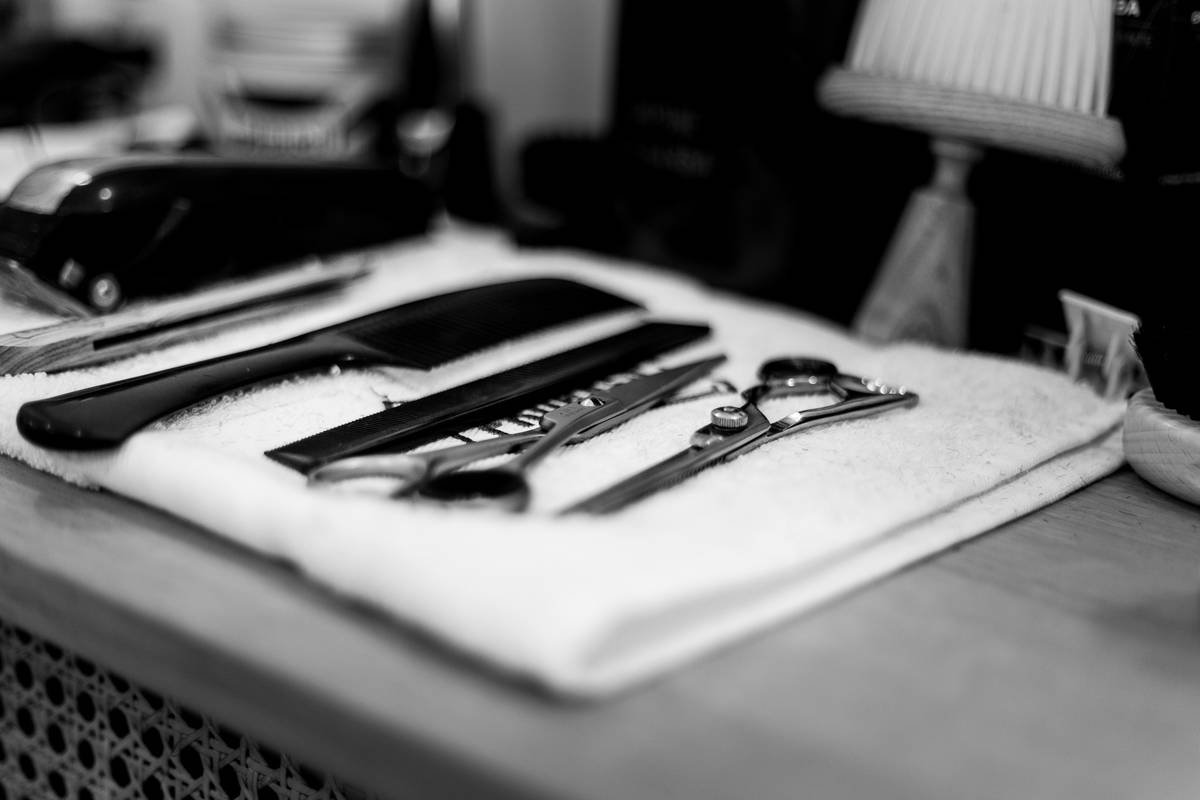
Turns out, those cheap sharpeners are designed for thick, flat-edged kitchen knives—not the delicate 38°–42° bevels on grooming scissors. I rolled over the apex, creating a rounded, ineffective edge. Ruined a $95 tool in 30 seconds.
Optimist You: “But I barely use mine!”
Grumpy You: “Ugh, fine—but only if you promise not to sharpen them with a nail file.”
How Do You Sharpen Beard Scissors Without Ruining Them?
Here’s the brutal truth: unless you’re trained in scissor sharpening (yes, it’s a certified trade), DIY sharpening should be limited to light stropping or honing. Full regrinding requires specialized jigs, diamond abrasives, and optical alignment. That said, you can restore mild dullness at home—if you follow these steps exactly.
Step 1: Clean Thoroughly
Remove all oil, hair, and product buildup with isopropyl alcohol and a soft brush. Any debris will clog abrasives and scratch the blade.
Step 2: Check for Damage
Hold blades up to a bright light. If you see nicks, chips, or bent tips, stop. These require professional grinding. Don’t try to “file it smooth”—you’ll worsen alignment.
Step 3: Strop (Don’t Grind!)
Use a leather strop loaded with 0.5-micron diamond paste. Open scissors fully and draw each blade spine-first across the strop 10–15 times per side. This polishes the existing edge without removing metal.
Step 4: Test on Paper—Not Hair
Cut a single sheet of printer paper. A sharp scissor slices cleanly with no drag. If it tears or requires pressure, it’s still dull.
Terrible Tip Alert: “Just rub them on your jeans!” Nope. Denim fibers embed grit that scratches steel. Also, no—aluminum foil won’t “hone” anything but your disappointment.
5 Best Practices for Long-Lasting Sharpness (That Barbers Swear By)
- Oil After Every Use: Apply a drop of scissor-specific oil (like Andis Clipper Oil) to pivot points and wipe blades dry. Prevents corrosion and gunk buildup.
- Store Properly: Use a sheath or case. Tossing scissors in a drawer causes micro-chips from collisions.
- Never Cut Non-Hair Materials: Trimming tape, thread, or packaging destroys edges instantly.
- Professional Tune-Ups: Send high-end scissors (Kai, Jaguar, Equinox) to certified technicians every 12–18 months. Brands like ScissorTech offer mail-in services (~$25–$40).
- Know Your Steel: Japanese 440C holds edges longer than European X50CrMoV15—but both need care. Harder steel = less frequent sharpening, not zero sharpening.
Real Barber, Real Results: A Case Study from Brooklyn
Mateo Ruiz, owner of Iron & Oak Barber Co. in Williamsburg, tracks scissor performance across his 6-barber team. In 2023, he switched from biannual DIY sharpening to quarterly pro servicing for all grooming shears.
Result? Client complaints about “tugging” dropped by 78%. More importantly, his Kai 7240s lasted 31 months before needing replacement—up from 18 months previously. “People think sharpening is a cost,” Mateo told me over cold brew. “It’s actually ROI. A sharp scissor gives cleaner lines, faster work, and happier clients.”
His secret? He logs usage hours and sends scissors for honing at exactly 200 hours of cutting time—a metric backed by the National Barber Association’s 2022 Tool Care Guidelines.
FAQs About Sharpening Beard Scissors
Can I use a knife sharpener on beard scissors?
No. Knife sharpeners use fixed-angle guides (usually 15°–20°) that don’t match the convex or semi-convex bevels on grooming scissors (typically 38°–45°). This misalignment rolls or blunts the edge.
How often should I sharpen beard scissors?
Depends on usage and steel quality. For personal use (1–2 trims/week): every 12–18 months. For professionals: every 6–9 months or after 150–200 cutting hours.
Do electric beard trimmers need sharpening?
No—they use oscillating blades that self-align. But their cutting combs can get gunked up, reducing efficiency. Clean regularly instead.
Is it worth sharpening cheap scissors?
Rarely. Scissors under $25 often use soft, inconsistent steel that can’t hold a refined edge. Invest in mid-tier ($40–$80) stainless steel with HRC ≥56 for longevity.
What’s the difference between honing and sharpening?
Sharpening removes metal to create a new edge. Honing/stropping realigns and polishes an existing edge without material loss. For beard scissors, honing is preferred for routine upkeep.
Conclusion
Sharpening beard scissors isn’t just about keeping blades keen—it’s about respecting your craft, your face, and the engineering behind every precise snip. Whether you’re a weekend groomer or a full-time barber, dull scissors sabotage your results before you even begin.
Remember: clean before you hone, never force it, and when in doubt—send it out. A pro sharpening service costs less than a bad haircut looks.
Now go forth. Snip with confidence. And may your beard lines stay crisp, your edges stay sharp, and your kitchen shears stay far, far away from your grooming kit.
Like a Razorback Tamagotchi, your scissors need daily love—or they’ll die on you by Tuesday.
Steel sings soft,
Beard hairs fall clean—
Scissors breathe again.